Secure ZIP Files on Mac with Password Protection
Creating an encrypted archive on macOS safeguards your sensitive files from access by unauthorized users during storage or transit. This walkthrough explains native Terminal commands, native OS limitations, and dedicated software solutions for adding AES-256 passwords to your folders.
To create a password-secured ZIP file on Mac for free without external software, you must use Terminal. Open Terminal, type zip -er archive_name.zip folder_to_zip/, press Enter, and type your desired password twice. For users who prefer a graphical interface or need advanced AES-256 encryption, dedicated tools like Folder Lock are recommended over the native Mac archive utility.
Mac Terminal Method
The native way to encrypt using standard ZIP security.
Jump to tutorial ↓Dedicated Software
Graphical tools utilizing strong AES-256 encryption protocols.
See top picks ↓Fixing Locked Archives
What to do if a ZIP won't open or throws permissions errors.
Read the guide ↓Reasons macOS Doesn't Make ZIP Passwords Easy
If you have ever right-clicked a folder on your Mac desktop and selected "Compress," you likely noticed a glaring omission: macOS gives you a standard ZIP file but offers absolutely no graphical prompt to add a password.
When searching for "create password-secured zip file mac" or "macos create zip with password," many users are surprised to learn that Apple's native Archive Utility completely lacks encryption UI. While the underlying Unix system within macOS can password protect a zip file, it forces users into the command line (Terminal) to do so.

Compatibility Note: Ventura, Sonoma & Sequoia
The native Terminal approaches described In this walkthrough, function universally across macOS Monterey, Ventura, Sonoma, and the latest macOS Sequoia privacy enhancements. That said, Gatekeeper and SIP (System Integrity Protection) on Apple Silicon (M1/M2/M3) Macs may require you to grant Terminal "Full Disk Access" if you are zipping files located in protected directories like Desktop, Documents, or Downloads.
Using Software: If you opt for our recommended dedicated tool, Folder Lock 10 for Mac is fully optimized for macOS 13 and newer, blending seamlessly with the native Mac interface while handling all backend permissions automatically.
Which ZIP Protection Method is Right for You?
Before diving into commands or downloads, let's identify what you are actually trying to achieve with your Mac's files.
I need to protect my ZIP file because...
Emailing requires cross-platform compatibility. If you use Terminal, it defaults to standard ZIPcrypto which can be weak. Use a dedicated tool that outputs AES-256 ZIPs to ensure Windows recipients can open it securely.
You don't need external apps. Jump to the Terminal zip command below. It uses
zip -er and gets the job done instantly natively in macOS.
Terminal can handle batching via scripts, but it's prone to error. Look at our software recommendation (Folder Lock) for bulk processing without writing bash loops.
Cloud providers often scan unencrypted ZIPs. To prevent Google Drive or Dropbox from indexing your document metadata, you must use AES-256 encryption before uploading.
Create Password Protected ZIP on Mac — All Methods
Method 1: Mac Terminal ZIP Encryption Command
This is the native approach to password protect zip mac free. It requires no downloads, but you must be careful with spacing and file paths.
- Open Spotlight (Cmd + Space), type Terminal, and hit Return.
- Type
cdfollowed by a space, then drag the folder containing your files into the Terminal window (this sets the directory path). Press Return. - Copy and paste the command below, replacing ArchiveName and FolderName with your actual names.
zip -er ArchiveName.zip FolderName/
- Press Return. You will be prompted to
Enter password:. Type it (keystrokes will remain invisible for security) and press Return. - Verify the password and press Return again. The ZIP will generate in the same folder.
zip command uses standard ZIPcrypto, not AES-256. While it prevents casual snooping, it is not considered secure against brute-force attacks.
Method 2: Using Free Third-Party Archivers (e.g., Keka)
If you want to know how to password protect a zip file on mac without terminal, free utilities like Keka bridge the gap.
- Download and install Keka from their website or the Mac App Store.
- Open Keka. In the primary window, check the "Exclude Mac resource forks" box (this prevents hidden
.DS_Storefiles from causing errors on Windows). - Type a password in the "Password" and "Repeat" fields.
- Drag your folder directly onto the Keka window. It will generate the protected archive.
ZIP Encryption Methods Compared
| approach | Difficulty | Encryption Standard | Cost | Best For |
|---|---|---|---|---|
| macOS Terminal | Moderate (Command Line) | Standard ZIPcrypto | Free | Quick, native compression without installing apps. |
| Keka / 7-Zip (Mac) | straightforward (Graphical UI) | AES-256 | Free / Tipware | Basic UI archiving with stronger AES security. |
| Folder Lock 10 (Mac) | Very straightforward (Drag & Drop) | AES-256 Military-Grade | Free (1GB limit) / $39.95 Pro | Users needing unbreakable document security, secure cloud lockers, and cross-platform syncing (iOS/Android/Windows). |
Reasons We Recommend Folder Lock for Mac
While Terminal is free and Keka is functional, neither offers comprehensive document security. A ZIP file is just a container. If you need to lock files from editing, restrict document access, or prevent document copying across platforms, standard ZIP archives fall short.
We recommend Folder Lock 10 for macOS since it transforms file protection into a seamless, daily workflow. Instead of manually zipping folders, it creates permanent, virtual encrypted drives. You can drop files in, edit them securely on the fly, and even sync your protected lockers across your iPhone, iPad, or Windows PC.
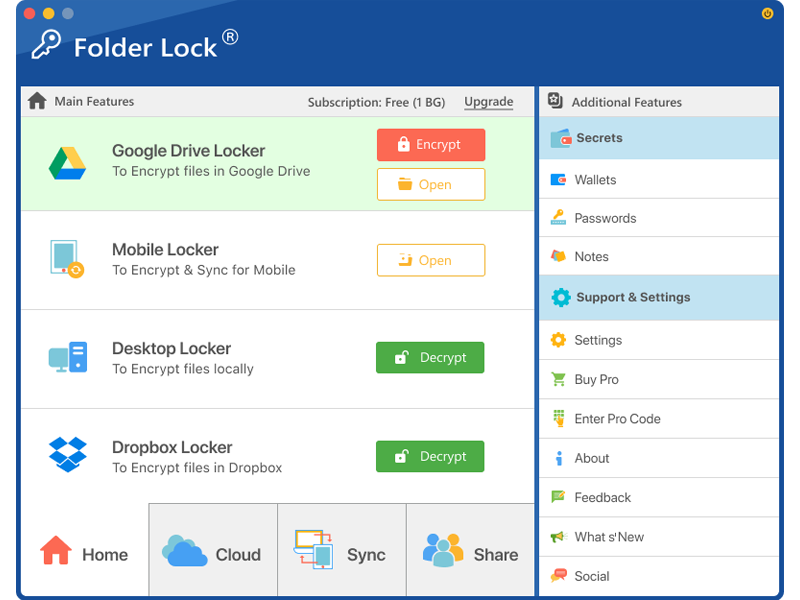
Folder Lock AES-256
Locker: Secure_Docs.flk
Status: Encrypted & Locked
Security Beyond Standard ZIPs
When protecting sensitive office files or PDFs on Mac, here is why a dedicated locker outpaces a traditional ZIP file.
Edit Without Extracting
With a normal ZIP, to edit a Word document, you must extract it, type your password, edit the file, delete the old ZIP, and re-create a new password-secured ZIP. With Folder Lock, the locker mounts as a secure drive. Edit your files natively in Word or Pages, and the moment you close the locker, the encryption is automatically updated.

Military-Grade AES-256
Terminal ZIP uses legacy ZipCrypto. This can be cracked by automated tools in minutes if the password is short. Folder Lock uses 256-bit AES encryption on the fly—the same standard utilized by governments and banks, making brute-force extraction mathematically impossible.

Pre-Encrypted Cloud Syncing
Cloud providers routinely scan your uploads. By utilizing Folder Lock's dedicated Cloud Lockers for Google Drive, Dropbox, or OneDrive, your files are encrypted locally on your Mac before a single byte transfers to the internet. Furthermore, the software automatically syncs your secure data across up to 5 devices, including your iPhone or Android.

Share Without Sending Passwords
A important flaw of ZIP files is that you have to text or email the password to the recipient, creating a massive security loophole. Folder Lock bypasses this by using asymmetric encryption, allowing you to grant authorized colleagues access to selected files without ever revealing your master credentials. You can also generate self-contained "Portable Lockers" to securely hand off on a USB drive.

Advanced ZIP & Document Security Concepts
When securing PDFs or Office files before zipping them, understand the difference:
- Open Password: Encrypts the entire file. The user cannot view the contents without the password.
- Permissions Password: Leaves the document readable, but locks editing, printing, or copying. Note: ZIP files only support Open Passwords. They cannot apply granular permissions.

A frequent problem: you create a ZIP on Mac, send it to a Windows user, and they get an error saying the folder is empty or corrupted. This is often caused by Mac's hidden __MACOSX folders and .DS_Store metadata. Using a dedicated security tool ensures the encrypted payload is clean and universally readable.
A standard ZIP file encrypts the contents of the files, but it leaves the filenames completely visible. If your file is named "Confidential_Payroll_2024.xlsx", anyone can see that name without a password. Full encryption lockers (like FileVault or Folder Lock) encrypt the directory tree as well, hiding filenames entirely.
Problem Solving Locked Documents & ZIPs
"Couldn't be opened for import if the file is password protected"
This is a highly frequent error when uploading a password-secured Excel, CSV, or ZIP file to Google Sheets. Can Google open a password-secured Office file? No. Google's cloud converters cannot bypass local AES encryption.
The Fix: You must remove the password locally on your Mac using Excel or your unarchiver, upload the raw file to Google Drive, and then rely on Google Drive's native account-level security to protect it.
Ways to Recover Access to a Locked Folder You Own
Users frequently search for "ways to open folder lock if password forgotten" or "how to crack folder lock password". If you used strong AES-256 encryption on a ZIP or locker, there is no backdoor.
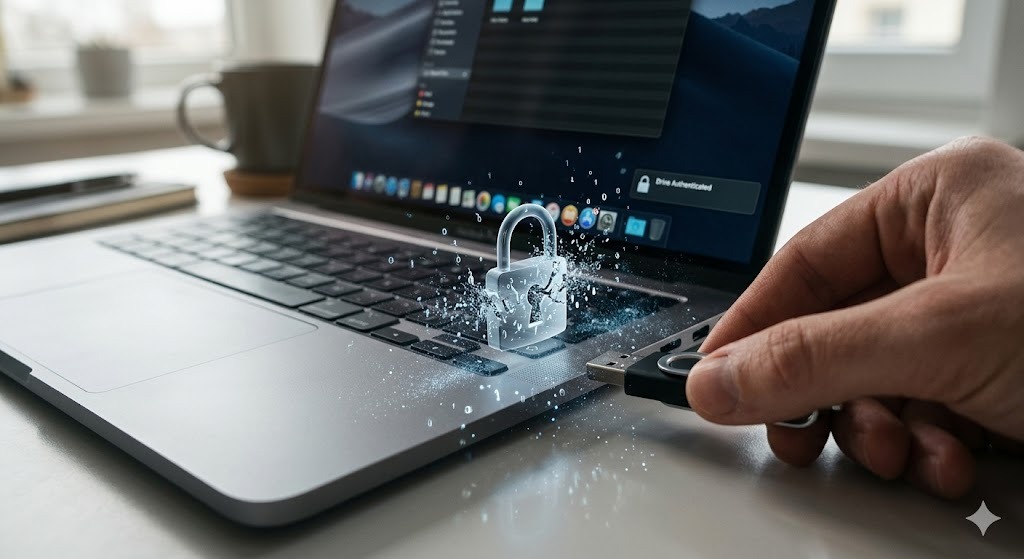
Legitimate Recovery Steps:
- Check your Mac's Keychain Access app. If you checked "Save password in my keychain" when creating the ZIP, the OS saved it there.
- If you are using a professional tool like Folder Lock, understand that there are absolutely no backdoors. The developer cannot reset your master password or recover your data if you lose it. Your encryption keys are stored solely on your local machine, not on a central server.
- If you have lost the password to an AES-256 archive and did not save it in a password manager, the data is mathematically unrecoverable. Do not trust websites claiming they can "crack" AES archives.
Mac ZIP vs. Folder Lock Versions
| function | Standard Mac ZIP | Folder Lock (Free) | Folder Lock (Pro - $39.95) |
|---|---|---|---|
| Maximum Protected Size | Limited by Drive | 1 GB Limit | Unlimited |
| Encryption Strength | ZipCrypto (Weak) | AES-256 | AES-256 |
| Cross-Device Syncing | ✗ No | Up to 2 Devices | Up to 5 Devices |
| Secure File Sharing | ✗ No (Must share password) | ✗ No | ✓ Yes (Asymmetric) |
| Secure Digital Wallets & Notes | ✗ No | ✗ No | ✓ Yes |
Common Questions and Answers
Basic Operations
-
How to add a password to an current ZIP file on Mac?
You cannot directly append a password to an current, unencrypted ZIP. You must unzip it, and then re-zip it using the Terminal command or a security app to apply the encryption wrapper. -
Can I password protect a document in Google Drive?
Google Drive does not have a native "folder password" function. To create a password-secured folder in Google Drive from a Mac, you must encrypt the folder locally (as a ZIP or Locker) and then sync that locked file to the cloud.
Security Standards
-
What encryption does macOS use for password-secured ZIPs?
By default, the Terminal `zip -e` command uses standard PKZIP encryption (ZipCrypto), which is considered weak. For AES-256, you must use external software. -
Can a password-secured document be hacked?
If protected with ZipCrypto, yes, brute-force dictionary attacks can crack short passwords quickly. If protected with AES-256 and a strong passphrase, it is practically immune to modern hacking attempts.
Platform Limitations
-
Can I password protect a Chrome profile?
Chrome browser doesn't have any native function to password protect profiles. You must use OS-level account switching or external app lockers to restrict access to the entire browser application. -
Is PDF password security the same as encryption?
Applying an "Open Password" to a PDF encrypts the contents. That said, applying a "Permissions Password" (to lock editing) often leaves the text unencrypted, meaning specialized tools can sometimes strip the permission restrictions.
Other Security Tools from the Developer
These tools are developed by NewSoftwares.net, the same team behind Folder Lock.
Folder Lock iOS & Android
Extend your document security to your smartphone. Sync your Mac lockers seamlessly and utilize local biometric locking.
Cloud Secure
An alternative targeted application to lock your local Dropbox, Google Drive, and OneDrive sync folders on your desktop directly.
Our Verdict
If you rarely need to zip files and simply want to send a one-off compressed folder, the Mac Terminal zip -e command is sufficient. That said, for professionals dealing with tax documents, client data, or batch document protection, native macOS tools are cumbersome and rely on outdated encryption protocols. For those users, Folder Lock offers the necessary AES-256 security with a vastly superior daily workflow.